
Is Cosmetic Surgery Safe? The Truth a Surgeon Shares
Before any operation, the question that keeps many people awake at night is not "will the result look good," but a more private fear: whether they will leave the operating room safely and recover normally. This is a completely legitimate question, and a sign of someone making a responsible decision about their own body. So, is cosmetic surgery safe? The honest answer from a specialist's perspective is this: safety is not a matter of chance, but is determined by specific factors that can be controlled and assessed before you are on the operating table.
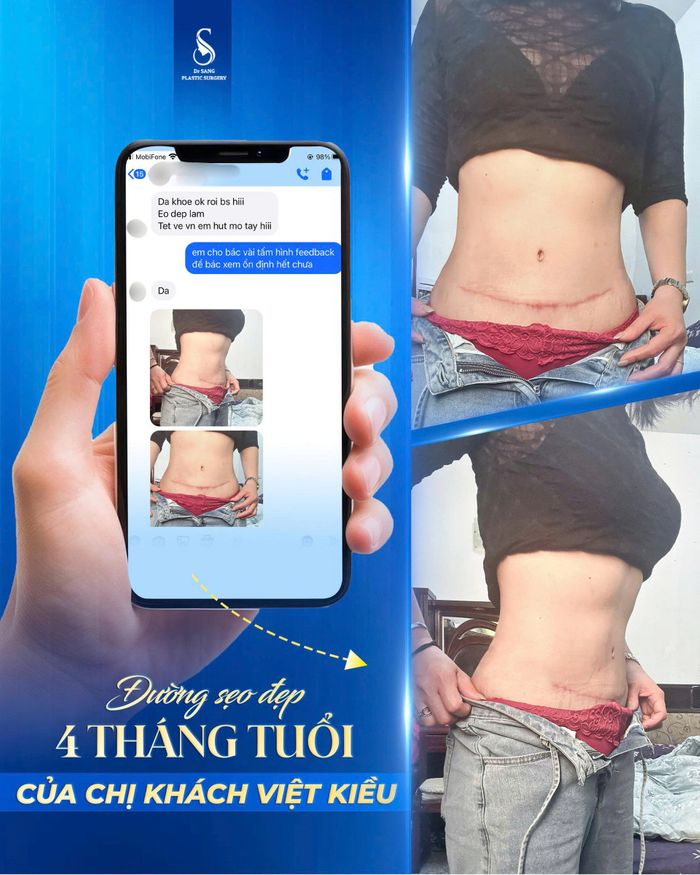
Is cosmetic surgery safe, seen from a medical basis
Fundamentally, aesthetic plastic surgery is a genuine surgical intervention that follows the same principles as any operation: asepsis, anesthesia and local anesthesia, bleeding control, and postoperative care. When asking is cosmetic surgery safe, professionals do not answer on instinct but rely on three pillars established in the medical literature.
The first pillar is preoperative screening of the patient's individual condition. The patient undergoes a clinical examination, basic blood tests, coagulation assessment, evaluation of liver and kidney function, and a review of allergy history. This is the step for the early detection of potential risk factors. The second pillar is the surgical environment: an operating room that meets aseptic standards, equipment for monitoring vital signs, and an anesthesia and resuscitation team always ready to manage any situation. The third pillar is the skill and transparency of the person holding the scalpel.
Why "who performs it" matters as much as "what is performed"
With the same technique, the result and the degree of safety can differ significantly depending on who performs it. A properly trained specialist surgeon knows how to choose the incision approach, control the tissue, limit damage to blood vessels and nerves, and prevent complications. That is why having the surgeon directly examine, advise, and perform the operation — rather than only meeting a consultant — is an important safety indicator that patients should proactively ask about.
Solutions that help make a cosmetic surgery procedure safer
Safety is built before you even enter the operating room. The standard process begins with a direct examination: the surgeon listens to your wishes, assesses your anatomical structure, analyzes your individual condition, and recommends a suitable plan — sometimes advising against intervention for the time being. An honest surgeon will clearly state what the technique cannot achieve, rather than over-promising.
The choice of materials also contributes to safety. For breast augmentation, using genuine implants with a clear origin such as Mentor or Motiva (the Ergonomix 2 line), which are FDA-cleared, helps reduce risks related to material quality while allowing transparent warranty tracing. In addition, the procedure should be carried out at a medical facility — a hospital that meets the required standards and has full resuscitation capability — not at a spa or an unlicensed establishment.
Postoperative monitoring — the other half of safety
The end of the operation does not mean the end of care. The postoperative period is precisely when the body recovers and needs to be monitored closely: pain control, wound care, early detection of any abnormal signs, and follow-up visits on schedule. A process with thorough postoperative monitoring allows for timely intervention if a problem arises, instead of leaving the patient to cope on their own at home.
The real benefits of choosing the right place and the right person
When performed by a specialist surgeon at a standard-compliant facility, cosmetic surgery aims not only to improve appearance but also to give the patient medical peace of mind. The greatest benefit is reassurance: you clearly understand what you are going through, who is responsible, and how any abnormality will be handled.
Cost is often a concern that accompanies the question of safety. In reality, the cost of an operation is influenced by many factors: the type of technique, the complexity of the case, the materials used, the method of anesthesia, and the postoperative care regimen. What matters is not the lowest figure, but transparency — you need to have it clearly explained what the cost includes before you decide.
Myth-busting: common misconceptions
Many people believe that "the cheaper the price, the better the value" or that "a procedure at a spa is the same as at a hospital." These are mistaken notions that carry hidden risks. Surgery is a medical intervention that requires resuscitation capability and an aseptic environment that unlicensed establishments often cannot provide. Another misconception is the belief that results will be identical from one person to another. The truth is that results depend on each individual's condition — tissue structure, healing capacity, and aftercare — so they need to be assessed through a direct examination and cannot be copied from someone else's case.
Medical notes: contraindications and normal side effects
Not everyone is immediately suitable for surgery. Some cases require caution or postponement, for example: an active acute infection, uncontrolled coagulation disorders, unstable cardiovascular disease or diabetes, pregnancy or breastfeeding, or unrealistic expectations about the result. This is precisely why the step of preoperative screening of your individual condition is mandatory.
In addition, patients should understand that after surgery there will be normal side effects that are part of the recovery process: swelling, bruising, a feeling of tightness, and temporary mild numbness at the treated area. These signs usually subside over time. However, if abnormal signs appear — such as markedly increasing pain, fever, foul-smelling discharge, or widening redness, warmth, and swelling — the patient should contact the surgeon immediately for a prompt check.
Conclusion: is cosmetic surgery safe?
Returning to the original question, whether cosmetic surgery is safe depends on being thoroughly screened for your individual condition, having the procedure performed by a specialist surgeon at a standard-compliant medical facility, and being fully monitored afterward. It is a journey that can be controlled, as long as you choose the right person and the right place. And once again, we wish to emphasize: results vary by individual and require a direct examination before accurate advice can be given.
Dr. Vo Thanh Sang (Specialist Level I) — Specialist Level I in Aesthetic Plastic Surgery, with over 15 years of experience and 12,000+ patients, Head of the Cosmetic Surgery Unit at World Wide Hospital (License 050864/HCM-CCHN). The doctor personally examines, advises, and performs surgery, carried out at a standard-compliant hospital with transparent costs.
Register for a free consultation and individual-condition screening with a specialist surgeon to have your own level of suitability and safety assessed. Contact Dr. Vo Thanh Sang — 244A Cong Quynh, District 1, HCMC — Hotline 079 7479 222.