
Safe Buttock Augmentation: The Truth About Implant Materials Few Discuss
Many people come to buttock augmentation hoping for a more balanced contour, but what troubles them most is usually not the size — it is a quiet, private concern: will the material placed in the body cause complications later, or will it require revision surgery a few years down the line? That concern is entirely valid. In practice, the line between a successful case and a problematic one does not lie in "how much bigger the buttocks become," but in the choice of method, the anatomical plane and the compatibility with each individual's body. This article will help you understand the true nature of safe buttock augmentation from the perspective of aesthetic plastic surgery.
Anatomical basis: why the plane of placement determines safety
The buttock region is made up of several layers: skin, subcutaneous fat, fascia and the large gluteal muscle (gluteus maximus) covering the deep nerves and blood vessels. During a procedure, the position where the material is placed or grafted largely determines the risk. Placement that is too superficial tends to make the edges visible, allows the material to be felt, and produces a less natural result; intervention in the deep vascular region carries serious potential risks. This is why every decision must be based on an assessment of tissue thickness, skin laxity and the proportions of each person's pelvic frame. Understanding the anatomical layers also helps explain why the same method can produce different outcomes from one individual to another.
Current approaches in safe buttock augmentation
There are three common groups of approaches, each suited to a different type of need. Autologous fat grafting uses the patient's own fat after harvesting and processing; it suits those who still have a fat reserve and want a more natural improvement, with the advantage of high biological compatibility, though some of the fat may be reabsorbed over time. Buttock implants suit those with limited fat who need a clearer volume, and require precise pocket-creation technique. Dedicated fillers, used in moderation, address needs for a mild improvement. No single method is best for everyone; safe buttock augmentation means choosing the right method for the right person, based on a direct examination rather than following trends.
A medically rigorous process to help reduce risk
A proper process begins with a general examination, a review of medical history, the necessary tests and an assessment of the patient's condition before any indication is given. Surgery should be performed in a sterile environment meeting hospital standards, with an anaesthesia and resuscitation team, and close monitoring during and after the procedure. The human factor matters as much as the technology: a doctor who personally examines, plans and performs the procedure maintains better control than a model where "one person consults and another operates." This is precisely what distinguishes a genuine medical facility from places without adequate professional capability.
The practical benefits of doing it the right way
When the indication is appropriate and the technique is performed correctly, the result is not only a contour better balanced with the body's proportions, but also a sense of confidence in clothing and in everyday movement. A good plan aims for natural harmony, minimal visible signs of intervention and a reasonable recovery time. However, it must be emphasised that results vary by individual, cannot be copied from one case to another, and require a direct examination to predict outcomes realistically.
Debunking common misconceptions
The biggest misconception is that "the bigger the size you choose, the more beautiful it is." In reality, a volume that exceeds the capacity and elasticity of the tissue can increase the risk of visible edges, displacement and a less harmonious result. Another misconception is believing that the result will stay unchanged forever; the body still ages, weight changes and soft tissue alters over time, so periodic follow-up is needed. Do not believe advertising claims such as "beautiful right away, with no aftercare required" — every procedure requires recovery time and adherence to care instructions.
Medical notes: contraindications and normal reactions
Not everyone is a suitable candidate for a procedure. Caution or postponement is warranted for people with clotting disorders, uncontrolled diabetes, infection in the area to be treated, severe underlying cardiovascular disease, women who are pregnant or breastfeeding, and those with unrealistic expectations. A history of keloid scarring or impaired wound healing should also be fully disclosed.
After a procedure, some reactions are normal and will gradually subside: swelling, bruising, tightness and discomfort when sitting during the first few days. Conversely, signs such as sharply increasing pain, high fever, abnormal discharge, spreading redness and warmth in the treated area, or sudden uneven swelling should be re-examined immediately. Following the follow-up schedule and care instructions is an inseparable part of safe buttock augmentation.
Factors affecting cost and transparency
Cost depends on the method indicated, the type of material, the complexity of each individual's case and the conditions of the facility performing the procedure. Rather than chasing an unusually low price, what matters is that the facility is transparent about line items and the materials used. For cases using implants, prioritise genuine, FDA-cleared implants of clear origin such as Mentor or Motiva (the Ergonomix 2 line).
Conclusion and invitation to consult
In short, safe buttock augmentation does not lie in a size figure but in the fit between method, technique and each individual's body, carried out in a standard medical environment. Every decision should begin with a direct examination, where the doctor makes a full assessment before offering advice.
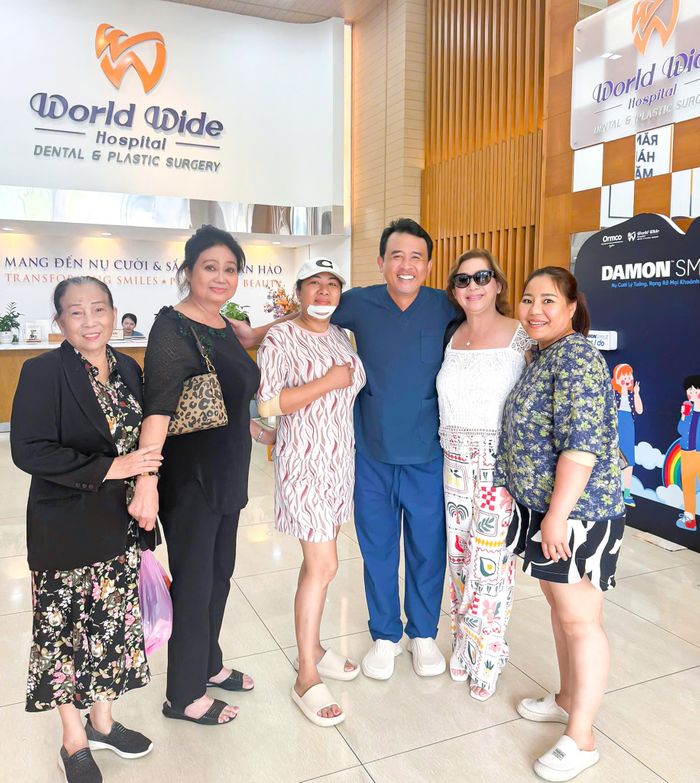
If you are considering it, please register for a free consultation and individual screening with a specialist doctor to understand the option that suits you. Contact Dr. Vo Thanh Sang — Specialist Level I in Aesthetic Plastic Surgery, with over 15 years of experience, having accompanied more than 12,000 patients, Head of the Aesthetic Surgery Unit at World Wide Hospital, at 244A Cong Quynh, District 1, Ho Chi Minh City. Hotline: 079 7479 222. The doctor personally examines, advises and performs the surgery; costs are transparent; procedures are carried out at a standard-compliant hospital.